
Sourcing Electronic Components from Shenzhen: An Insider's Guide
By the SZCHIPS team - Based in Huaqiangbei since 2014
February 2026
For the Western world, Shenzhen is often a black box - a place where intellectual property disappears and cheap clones emerge. For those of us who work here daily, it's something entirely different: the "Silicon Valley of Hardware," the only place on Earth where you can go from concept to working prototype in 48 hours.
But here's the reality: if you don't know the rules, Huaqiangbei will eat your margin and spit out non-working parts.
This isn't a guide about clicking "Buy" on Mouser. This is about surviving and thriving in the jungle of the world's largest electronics market - written by people who navigate it every day.
Understanding Huaqiangbei: The Ecosystem
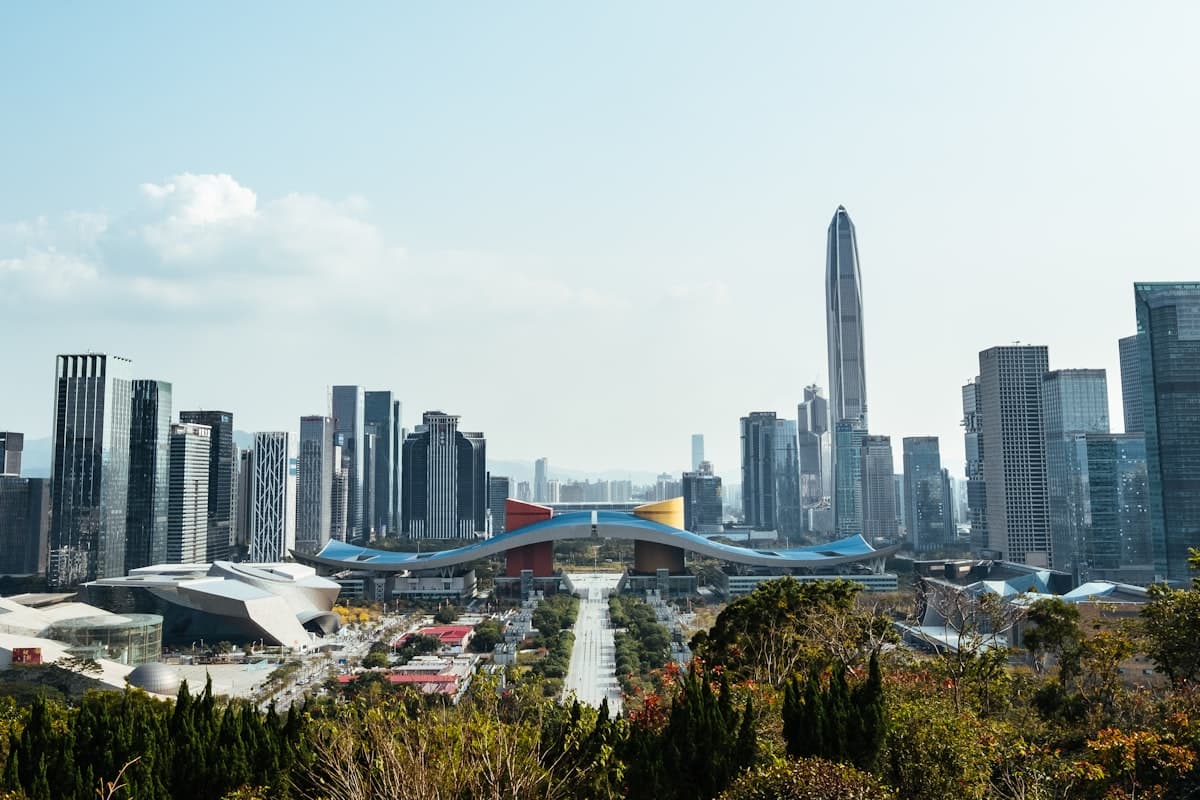
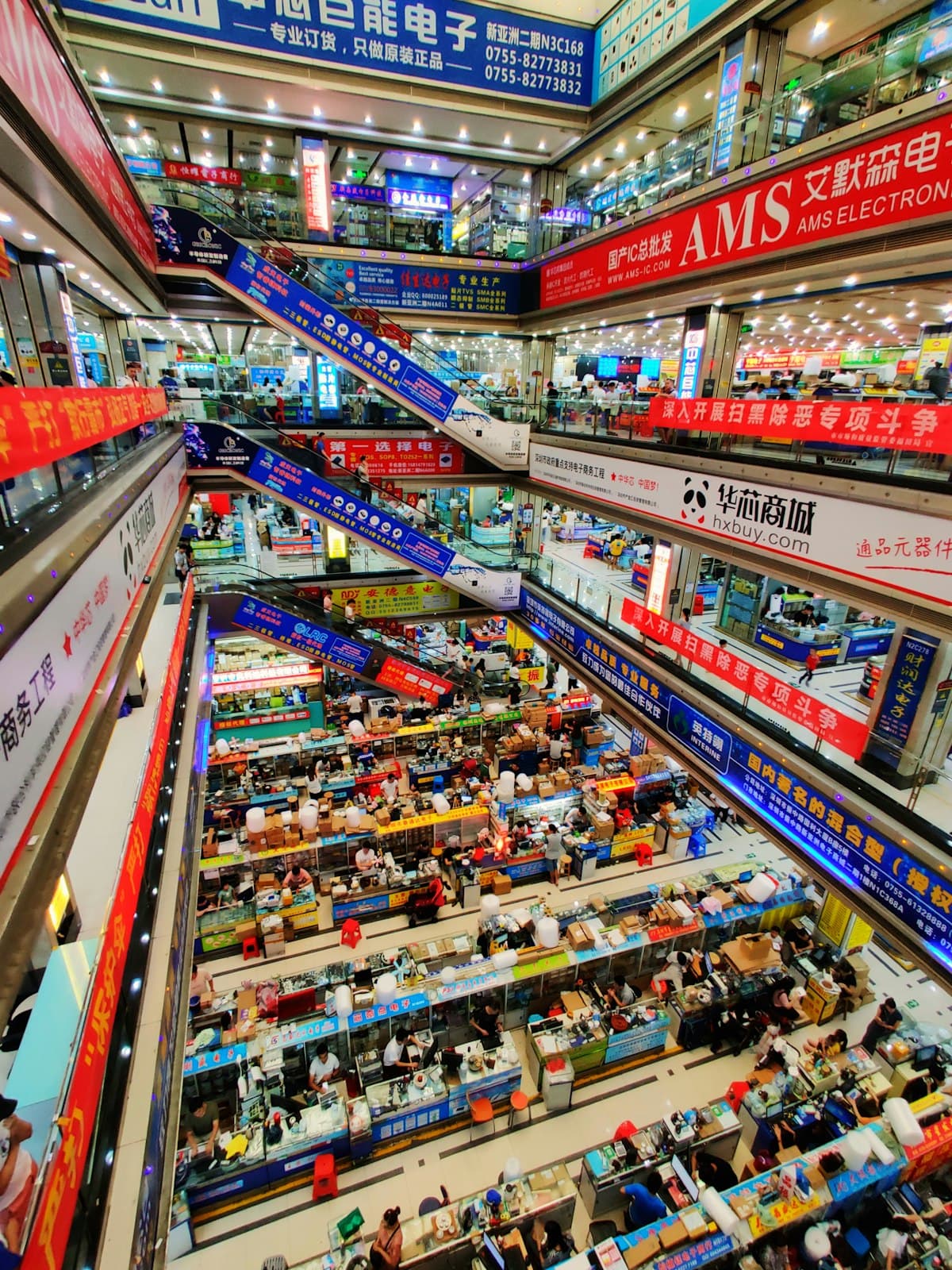
First, let's dispel a common misconception: Huaqiangbei (华强北, HQB) is not a single market. It's an ecosystem of 30+ interconnected buildings spanning 1.45 square kilometers in Shenzhen's Futian District. Annual transaction volume exceeds 400 billion RMB. Daily foot traffic runs 300,000-500,000 visitors.
A rookie mistake is walking into one building and thinking you've seen everything. You haven't seen 5% of it.
The Key Buildings and What They Offer
| Building | Chinese Name | Primary Focus | What You'll Find | |----------|--------------|---------------|------------------| | SEG Plaza | 赛格广场 | Components & Tools | Floors 1-2: Passives, connectors, cables. Floors 3-6: ICs, modules, instruments. Floor 10+: Trader offices (real deals happen here) | | Huaqiang Electronics World | 华强电子世界 | Mixed Components | Building 1-2: Second-hand, teardown parts, LED. Building 3: Consumer goods, newer stock | | HQ-Mart | 华强广场 | Second-hand & Parts | 6 floors of spare parts, computer accessories, repair tools | | Yuanwang Digital Mall | 远望数码城 | Mobile Phones | New and refurbished phones, accessories. 60%+ of China's bulk phone buyers source here | | Pacific Security | 太平洋安防 | Security Equipment | Cameras, DVRs, video processing chips (HiSilicon, Novatek) | | Ming Tong Digital City | 明通数码城 | Audio & Wearables | Earphones, smartwatches, fitness trackers |
The Floor Strategy
Here's something guides don't tell you: go vertical, not horizontal.
In most Huaqiangbei buildings:
- Lower floors (1-3): Retail-focused, higher margins, tourist pricing
- Middle floors (4-6): Wholesale, component specialists, better pricing
- Upper floors (7+): Trader offices, warehouses, serious B2B deals
If you're buying components, skip the ground floor chaos. Take the elevator up. The higher you go, the closer you get to actual stock holders.
Insider tip: For specific chips (old Xilinx FPGAs, rare STM32 variants), don't waste time on display booths. Booths are often just advertisements. Real inventory sits in warehouses in the Futian Bonded Zone or across the border in Hong Kong.
The Supplier Hierarchy: Know Who You're Dealing With
When you send an RFQ (Request for Quote), anyone might respond. Understanding who you're actually talking to is critical:
Tier 1: Original Factory Agent (代理商)
The elite. These are authorized distributors with direct manufacturer relationships.
Characteristics:
- Work in full reels only (minimum quantities)
- Lowest unit prices
- Require significant volume commitments
- Full traceability and documentation
Best for: High-volume production, risk-averse buyers
Tier 2: Stockist (现货商)
The kings of Shenzhen. These operators buy excess inventory from factories for cash. They have physical stock, here and now, and they set market prices - especially during shortages.
Characteristics:
- Own their inventory
- Immediate availability
- Can provide photos and documentation quickly
- Price varies with market conditions
Best for: Spot buys, shortage situations, EOL parts
Tier 3: Trader (贸易商)
They have an office and a computer, but no warehouse. When you send an RFQ, they forward it to Stockists and add their margin (10-30%).
Characteristics:
- Don't hold inventory
- Slower response on documentation
- Additional markup
- Variable reliability
Best for: When you need sourcing legwork done for you
Tier 4: Runner / Backpack Dealer (炒货)
The most dangerous tier. These are people literally running between buildings with backpacks, flipping components. High risk of remarked, refurbished, or counterfeit parts.
Characteristics:
- No fixed location or business registration
- Cash-only transactions
- No traceability
- Cheapest prices (for a reason)
Best for: Avoid entirely for production. Maybe acceptable for non-critical prototyping if you verify everything.
How to Identify Who You're Dealing With
Ask for a photo of the component - on a scale, next to a screen showing Baidu (or any website) with the current date and time.
- A Stockist will send it within 5 minutes
- A Trader will make excuses ("warehouse is far," "tomorrow")
- A Runner will send you random stock photos
This simple test saves enormous headaches.
The Secret Weapons: Local Platforms
Here's a truth that will save you money: forget Alibaba for component sourcing. Alibaba prices are in USD, marked up for foreigners (老外价, "Lao Wai price").
If you're sourcing seriously from China, use the local platforms:
LCSC (立创商城)
The "Chinese Digi-Key." Founded in Shenzhen in 2011, now one of China's largest component distributors.
Why it matters:
- 560,000+ SKUs in stock
- All original components with traceability
- Fast domestic shipping (same-day in Shenzhen)
- Integrated with EasyEDA for prototyping
- Prices in RMB - consistently lower than USD platforms
Best for: Prototypes, small production runs, parts verification
IC37 / HQEW (华强电子网)
The professional trader platforms. Ugly interfaces, entirely in Chinese, but this is where Shenzhen's real traders post inventory.
Why it matters:
- Access to spot market pricing
- Find shortage parts that don't exist elsewhere
- Direct contact with local stockists
- Real-time market availability
Best for: Hard-to-find components, market price research
Key Search Terms
When searching Chinese platforms, these terms are essential:
| Term | Chinese | Meaning | |------|---------|---------| | Xianhuo | 现货 | In stock now | | Yuanchangyuan | 原厂原包 | Original factory, original packaging | | Sanxin | 三新 | Refurbished ("three-new") | | Chaiji | 拆机 | Teardown/harvested parts | | Tihuan | 替换 | Replacement/alternative |
Searching "STM32F103 现货" will get you very different results than searching on global platforms.
How Business Actually Works Here
Shenzhen operates on different protocols than Western procurement. Adapt or struggle.
WeChat is Everything
WeChat (微信) is not just a chat app. In Shenzhen, it's your CRM, email, payment processor, and business network combined.
Reality check:
- Email response time: 2 days
- WeChat response time: 2 minutes
If you don't have WeChat, you're not taken seriously. Most traders won't bother with email-only customers.
Pro tip: When adding suppliers on WeChat, send your RFQ directly in the chat. Include: part number, quantity, target price (if you have one), and required date code. Quick, professional messages get quick responses.
Payment: RMB vs. USD
If you have a Chinese company entity (like a WFOE), pay in RMB from a corporate account (对公账户). Benefits:
- Eliminates currency conversion costs
- Simplifies Fapiao (发票, official tax invoice) issuance
- Enables VAT refund on export (13% - this is pure margin)
- Builds credibility with suppliers
For foreign buyers without Chinese entities: USD payment is fine, but expect slightly higher prices and work with suppliers who handle foreign exchange.
Price Validity: Today Only
On the spot market, quoted prices are valid today. Sometimes not even that long.
The rule: "See it, verify it, pay for it."
Tomorrow, that lot might be bought by someone else, or the price might jump 10% because a factory in Taiwan had a power outage. The Shenzhen market moves in real-time.
Negotiation: The Reality
Bargaining isn't optional - it's expected. But there's a method to it.
The Standard Dance
- Supplier quotes high (expecting negotiation)
- You counter 30-50% lower (establishing your position)
- You settle at 20-40% off original quote (fair market price)
Tactics That Work
- "隔壁更便宜" (Next stall is cheaper): Classic, still effective
- Volume commitment: "If this works, we have 10K/month demand"
- Repeat business: Long-term relationship promises carry weight
- Cash payment: Immediate payment gets better prices than payment terms
- Reference pricing: "LCSC shows ¥X - why is yours higher?"
Tactics That Don't Work
- Aggressive ultimatums (you'll just be ignored)
- Claiming false volumes
- Disrespecting the supplier
- Expecting Western-style formal negotiation
Payment Terms
Standard structure for new relationships:
- 30% deposit after samples approved
- 70% balance upon QC inspection photos before shipping
For established relationships, some suppliers will offer:
- Net 30 terms
- Consignment arrangements
- Monthly settlement
Never pay 100% upfront to a new supplier. Any legitimate business understands this.
Quality Control: Trust Nothing, Verify Everything
The component market here includes genuine parts, factory seconds, remarked chips, harvested components, and outright counterfeits - often sitting side by side. Your QC process is your defense.
Visual Inspection (Minimum)
- Check markings under magnification (10x minimum)
- Look for inconsistent fonts, spacing, alignment
- Examine leads for re-tinning marks
- Check package condition (chips from tape shouldn't have handling marks)
Documentation Checks
- Request photos of reel labels before payment
- Google the lot number - if it appears on 5 different websites over multiple years, it's fake
- Cross-reference date codes with manufacturer production records
- Ask for COC (Certificate of Conformance) for critical parts
Technical Testing
For higher-value or critical components:
| Test Type | What It Catches | When to Use | |-----------|-----------------|-------------| | Electrical test | Non-functional parts | Always | | X-ray inspection | Reballed BGAs, die swaps | ICs > $5, all BGAs | | Decapsulation | Die verification | Mission-critical only | | Solderability test | Old/degraded parts | Date codes > 2 years | | XRF analysis | Lead content, alloy composition | RoHS compliance verification |
The Date Code Rule
Components with date codes older than 2 years (24+ months) require:
- Discount (stock aging = risk)
- Solderability testing before commitment
- MSL bake-out before use
Any supplier who won't agree to these terms for old stock isn't being honest about the risks.
Logistics: The Shenzhen-Hong Kong Connection
For exports, Shenzhen and Hong Kong operate as a linked system.
Why Hong Kong Matters
Most serious B2B transactions close on FCA Hong Kong terms:
- Logistics: Hong Kong International Airport has direct flights everywhere
- Finance: HK is an offshore zone - easier USD transactions, letters of credit
- Customs: Established export infrastructure
Cross-Border Movement
Thousands of "Shengang trucks" (深港车) cross the border daily. If you buy components in mainland China with VAT, proper customs clearance enables:
- 13% VAT refund on export - this is pure profit margin
- Clean documentation for your customers
- Compliance with import regulations at destination
Shipping Options
| Method | Use Case | Timeline | Cost Level | |--------|----------|----------|------------| | DHL/FedEx express | Samples, urgent small orders | 3-5 days global | High | | Air freight | Medium orders, time-sensitive | 5-10 days | Medium | | Sea freight | Large volume, cost-sensitive | 20-40 days | Low | | Rail (China-Europe) | Mid-sized orders to Europe | 15-18 days | Medium-low |
Consolidation tip: If ordering from multiple suppliers, use a freight forwarder to consolidate shipments. This cuts shipping costs 15-25%.
The Risks: Let's Be Honest
Shenzhen offers incredible opportunity, but the risks are real. Let's discuss them directly.
Counterfeits and Remarking
ERAI reported a 25% increase in suspect parts in 2024. Obsolete components are the highest risk category - if a part hasn't been made in 5 years but someone has "thousands in stock," be very suspicious.
Common schemes:
- Blacktopping (sanding and repainting old chips)
- Date code alteration
- Inferior grade parts marked as industrial/military
- Harvested components sold as new
Mitigation:
- Use the verification steps above
- Avoid "too good to be true" pricing
- Work with established suppliers who have reputation to protect
No Formal Contracts
Much of Huaqiangbei operates on relationships, not legal agreements. WeChat messages are your "contract." This creates risk for dispute resolution.
Mitigation:
- Work with suppliers who will provide formal quotations and invoices
- Use escrow services for large transactions
- Document everything (screenshots, photos, chat logs)
- For critical purchases, use agents who can provide legal accountability
Quality Variance
Even genuine suppliers may have inconsistent quality - different lots, different sources, different storage conditions.
Mitigation:
- Always test samples from actual production lot
- Specify date code requirements in orders
- Spot-check 10% of incoming shipments
- Build relationships where suppliers know you'll catch problems
When Shenzhen Sourcing Makes Sense (And When It Doesn't)
Ideal Use Cases
- Prototyping and small runs: Low MOQs, fast turnaround
- Hard-to-find components: EOL parts, shortage items, specialty chips
- Chinese alternatives: Pin-to-pin replacements for Western parts
- Cost optimization: Significant savings on volume orders
- Market research: Understanding true component availability and pricing
When to Use Traditional Distribution
- Aerospace/defense/medical: Regulated industries requiring full traceability
- High-volume production: Where authorized distribution provides supply security
- Risk-averse buyers: Companies that can't manage open market verification
- Automotive: Where PPAP and qualification requirements are strict
The optimal strategy for most companies: use both. Traditional distribution for your core production BOM; Shenzhen channels for allocation situations, EOL rescue, and cost optimization opportunities.
The SZCHIPS Approach
We're based here. We've been operating in Huaqiangbei since 2014. Here's how we work:
What We Offer
- Direct sourcing from verified stockists and factory agents
- On-site inspection before any shipment leaves Shenzhen
- Chinese alternative identification - we know which domestic parts actually work
- Documentation - COC, photos, test reports as needed
- Logistics coordination - we handle the Shenzhen-HK-destination chain
Our Verification Process
- Supplier qualification: We work with stockists we've vetted over years
- Physical inspection: Every order inspected at our location
- Documentation review: Lot codes, date codes, packaging verified
- Client communication: Photos and details before shipment
- Problem resolution: If something's wrong, we're here to fix it
What We Don't Do
- Sell parts we can't verify
- Misrepresent refurbished as new
- Work with runner-tier suppliers
- Skip inspection to save time
The Shenzhen market is powerful precisely because it's fast and flexible. We provide the verification layer that makes that power safe to use.
Insider's Pre-Deal Checklist
Before you finalize any component purchase from the open market:
1. Label Verification
Request photo of reel/bag label. Google the lot number. If it's been floating around multiple websites for a year, it's likely fake or exhausted stock being relabeled.
2. Date Code Assessment
If date code > 24 months: require discount and solderability test. If date code > 36 months: require bake-out before use per J-STD-033.
3. Price Sanity Check
If the price is dramatically below market (>40% under), something is wrong. Either it's not original, it's old, or it's damaged.
4. Payment Protection
For significant orders: 30% deposit, 70% after QC photo report. Use escrow services for new suppliers or large values.
5. Documentation Trail
Save everything: WeChat conversations, photos, invoices, shipping documents. This is your recourse if problems arise.
Key Takeaways
-
Huaqiangbei is an ecosystem, not a store. Understanding its structure gives you access that tourists don't have.
-
Know who you're buying from. The difference between a Stockist and a Runner can be the difference between success and failure.
-
Use local tools. LCSC, HQEW, WeChat - these are your competitive advantage over buyers who only use Alibaba.
-
Verify everything. The market includes genuine and fake parts side by side. Your QC process is your protection.
-
Speed matters. Prices change daily. Relationships matter more than contracts. Adapt to how business works here.
-
Know when to use it. Shenzhen sourcing is powerful for the right applications. It's not right for everything.
-
Physical presence is an advantage. If you can't be here, work with someone who is.
Conclusion
The Shenzhen market isn't chaotic - it operates on different protocols. Here, personal relationships (关系, Guanxi) and speed of response matter more than formal presentations.
You're reading this guide because you want access to the opportunities Shenzhen offers. The market rewards those who understand it and punishes those who don't.
At SZCHIPS, we've spent years learning these rules so our clients don't have to learn them the hard way. Whether you need help sourcing a specific part, verifying open market inventory, or finding Chinese alternatives for EOL components, we're here - physically in Huaqiangbei - ready to help.
Last updated: February 2026
Based on 10+ years of daily operations in Huaqiangbei, verified sourcing experience, and ongoing market engagement.
Need Help Sourcing Components?
Our Shenzhen-based team is ready to help with EOL, hard-to-find, and specialty component needs. Quote in 2-4 hours, 1-year warranty.